Narrative Power Alliance: Exhibition
09.01.2025 – 09.02.2025
Barın Han
Curated by: Alper Turan & Onur Karaoğlu
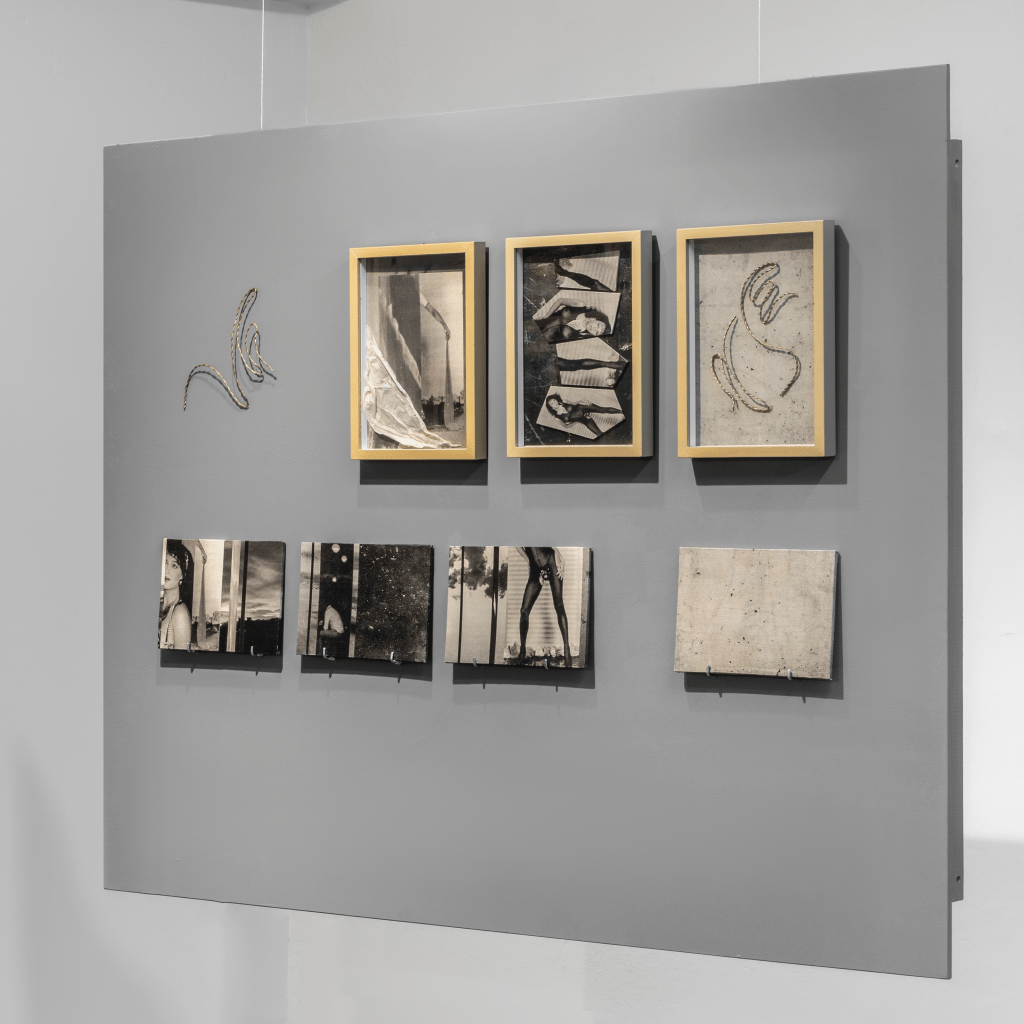
Furkan Öztekin (with Ceyhan Fırat), Past Recedes, (20x 29 cm (framed 23×31,5 cm), 8 pieces, 2025 (Photo: Zeynep Fırat)
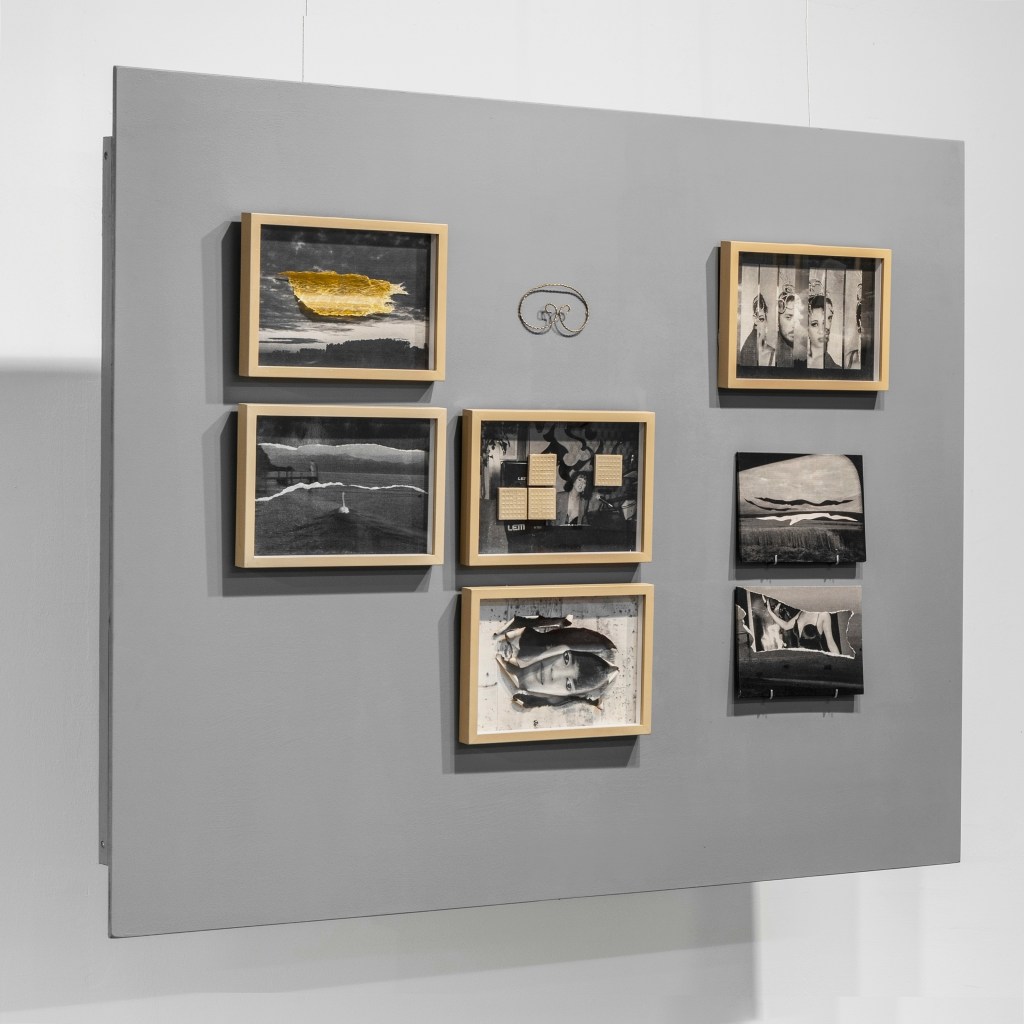
Furkan Öztekin (with Ceyhan Fırat), Fragmanted Landscapes, Paper Collage on MDF, 17X24,5, 8 Pices, 2025 (Photo: Zeynep Fırat)
Horizontal and Vertical Intersections of Memory, Furkan Öztekin & Ceyhan Fırat
Furkan Öztekin’s ongoing engagement with the late trans-poet-activist Ceyhan Fırat’s archive demonstrates how narrative-making is always evolving, resisting a single coherent storyline. Since 2019, beginning when Ceyhan was still alive, Öztekin has collaborated with her by collecting, reconfiguring, and responding to texts, photos, and found objects from Fırat’s corpus and archive, while also incorporating elements from his own archive, which includes photographs of Ülker Sokak and deeply personal items such as his journals. Fırat’s declaration, “This is not my archive; it is our archive,” became a guiding ethos for their collaboration, emphasizing shared ownership. Each work—from fictional texts they co-wrote to Öztekin’s re-production of a crown Ceyhan used to wear, his attempts to capture sites from her life in Ülker Sokak today, and the color hue (“pejmürde pembe”) she described in her poems—becomes an intertemporal, interpersonal assemblage, embodying “horizontal and vertical intersections of memory.” Since Ceyhan’s passing, the archive has taken on an even more elusive quality: it continues to speak, yet its storyteller is no longer present to clarify contradictions or fill in
the gaps. By embedding these evolving relationships within his work, Öztekin expands upon Fırat’s legacy, crafting poetic assemblages that are as much about absence and disjunction as they are about connection and continuity. In a recent interview for writer/researcher Çağla Özbek’s book Unreliable Narrator, Öztekin discusses the slippery nature of Ceyhan’s story—a biography shaped by multiple voices and contested truths. This dialogue prompted him to revisit his methods and more explicitly explore the concept of the “unreliable narrator” in his new body of work. What emerges is not a fixed chronology but a fluid assemblage of recollections,
omissions, and fictional elements.
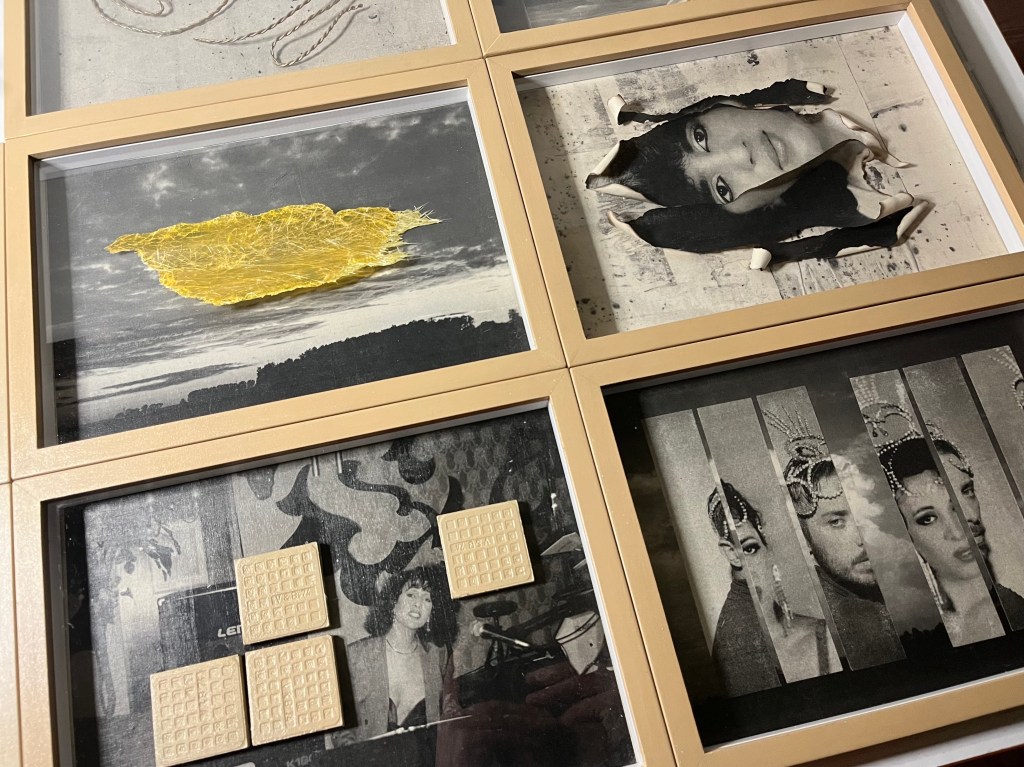

Öztekin performs a meta-critique of his practice—collaboration, inspiration, and appropriation—by presenting photographs mounted on MDF, wire mesh, ink drawings on paper, an found objects. These materials are arranged in frames, yet they also slip beyond them, hintin at a narrative that refuses containment. Meanwhile, wire mesh snakes through the installation—sometimes contained within frames, sometimes sprawling across the assemblage—tying disparate scenes together, even as it underscores the archive’s inherent contradictions.
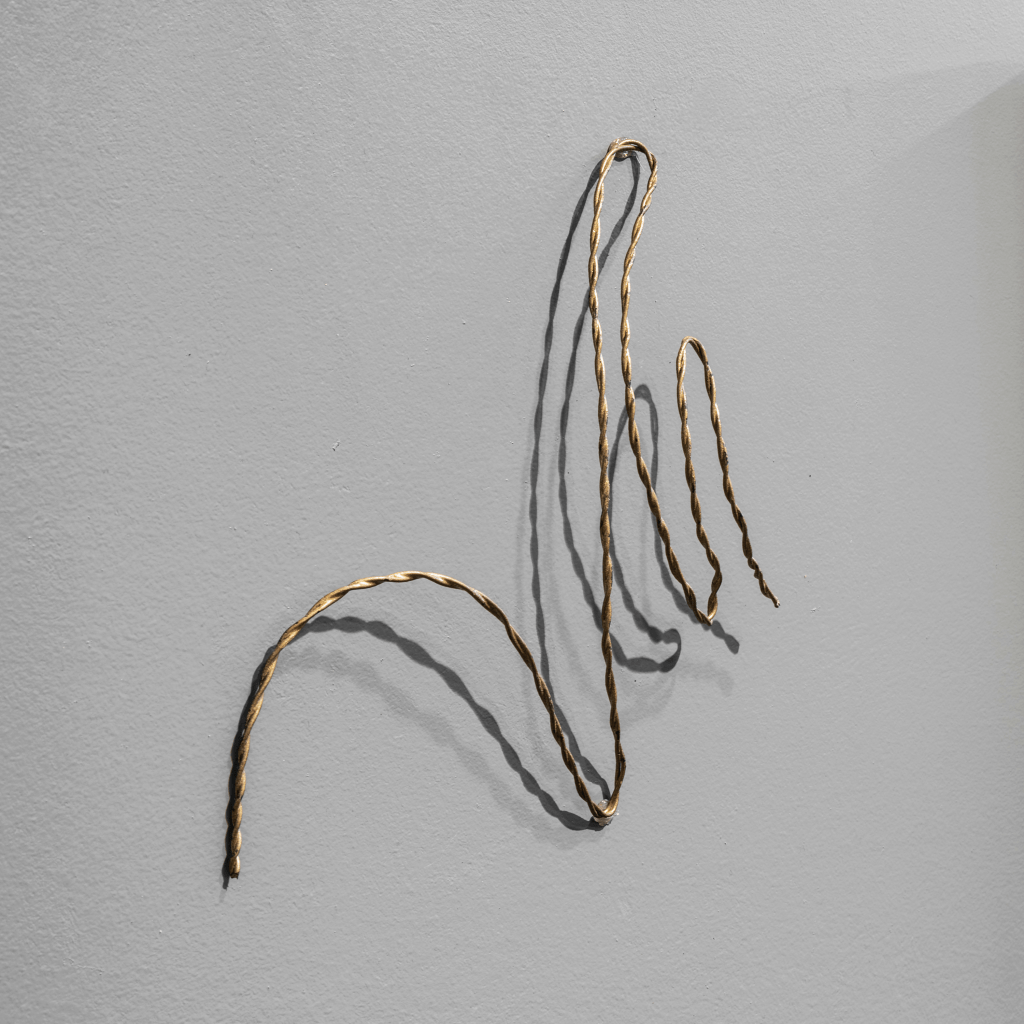
Furkan Öztekin, Leftover Pieces from The Crown, 2022
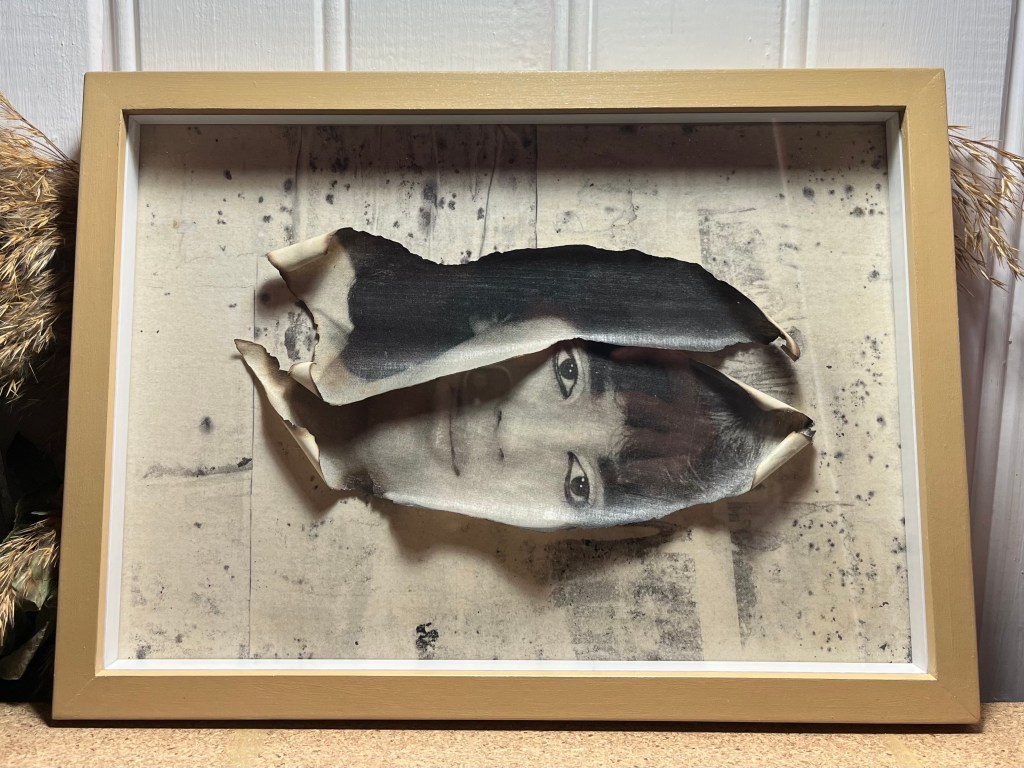
Within this assemblage, a burned portrait of Fırat, its edges charred and curling, becomes a visceral reminder of erasure and survival. A luminous sheet of yellow fabric, suspended against a dark, expansive landscape, hovers as a spectral presence, resisting dissolution. Strands of woven wire, looping, twisting, and threading through the compositions, anchor these works in a shared material and symbolic language. This wire—repurposed from Öztekin’s recreation of Fırat’s crown—enacts a poetics of continuity and reconfiguration, weaving together fragmented narratives and temporalities.
Text: Alper Turan, Artworks as Assembly of Bodies in Public,
Exhibition as Demonstration, Narrative Power Alliance: Exhibition, Publication, 2025 (p: 33-34.)

 Furkan Öztekin