Exhibitions:
Positive Space
Operation Room, American Hospital
01.12.2018 – 02.02.2019
Curated by Alper Turan
HIVstories. Living Politics
Biennale Warszawa, Schwules Museum & Dramaqueer
12.09.2019 – 10.04.2020
Curated by Zülfukar Çetin, Agata Dziuban, Friederike Faust, Emily Jay Nicholls, Noora Oertel, Todd Sekuler, Justyna Struzik, Alper Turan
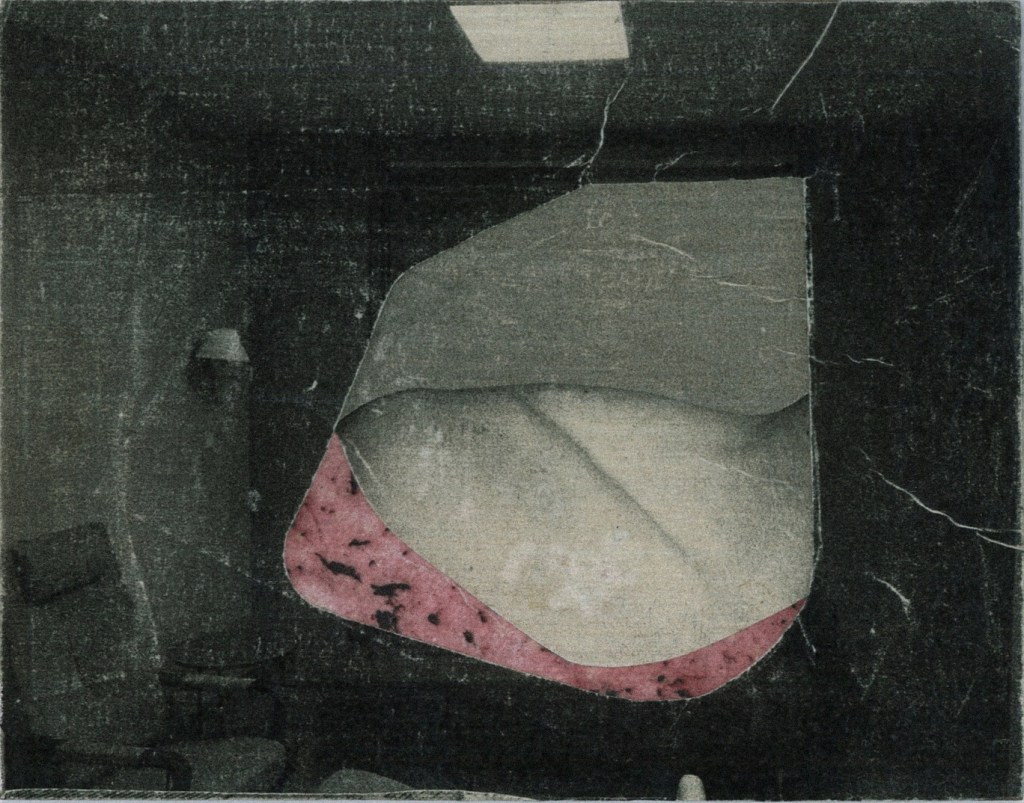
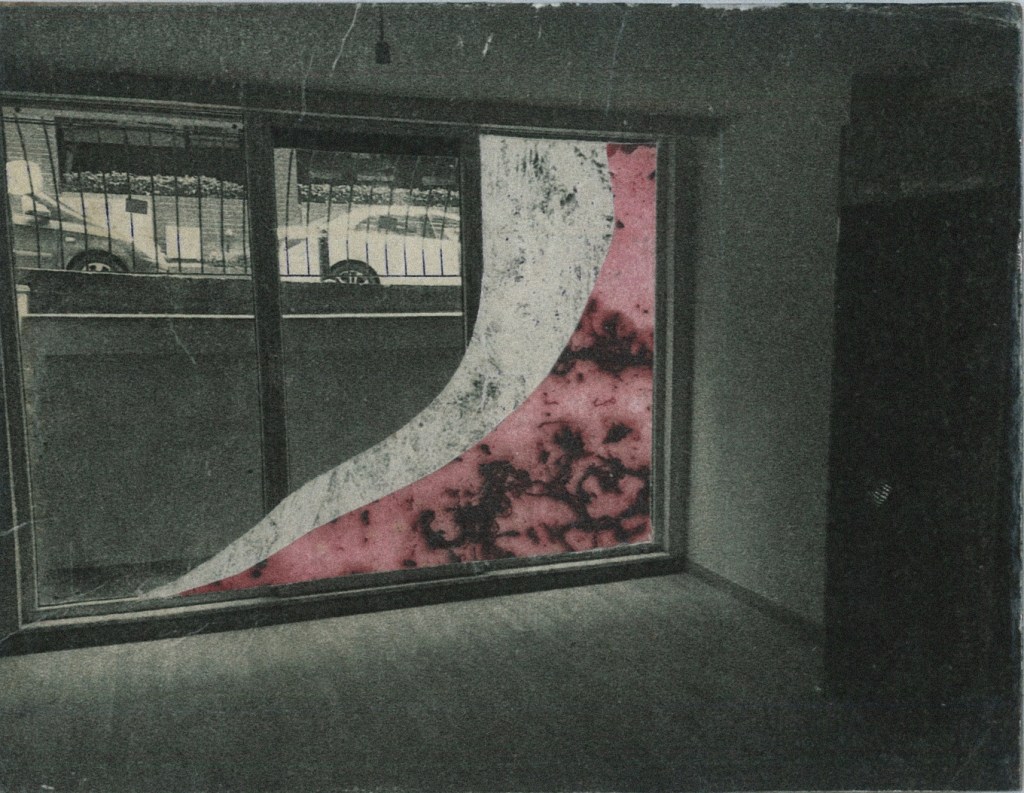
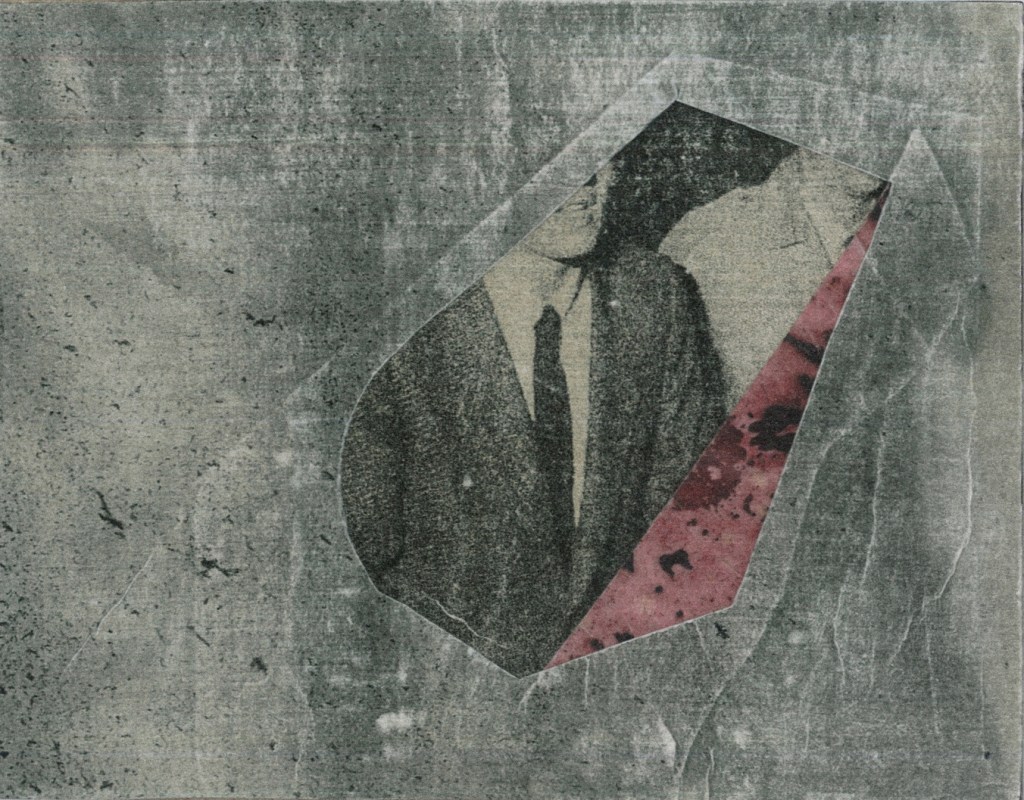
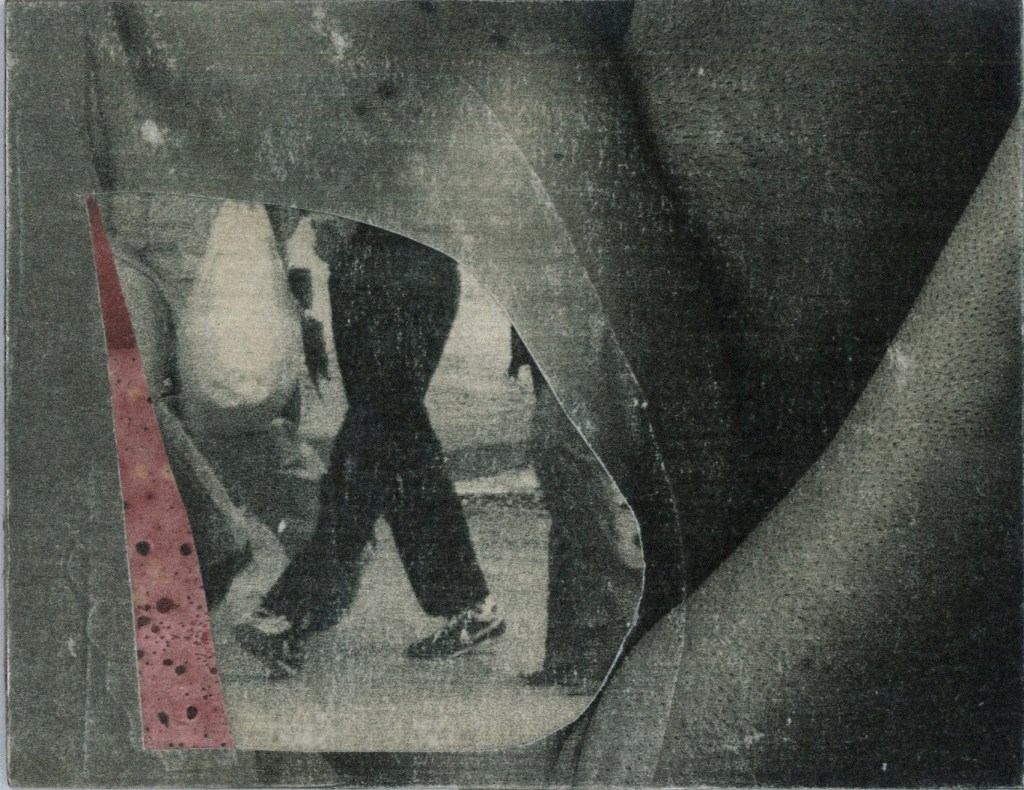
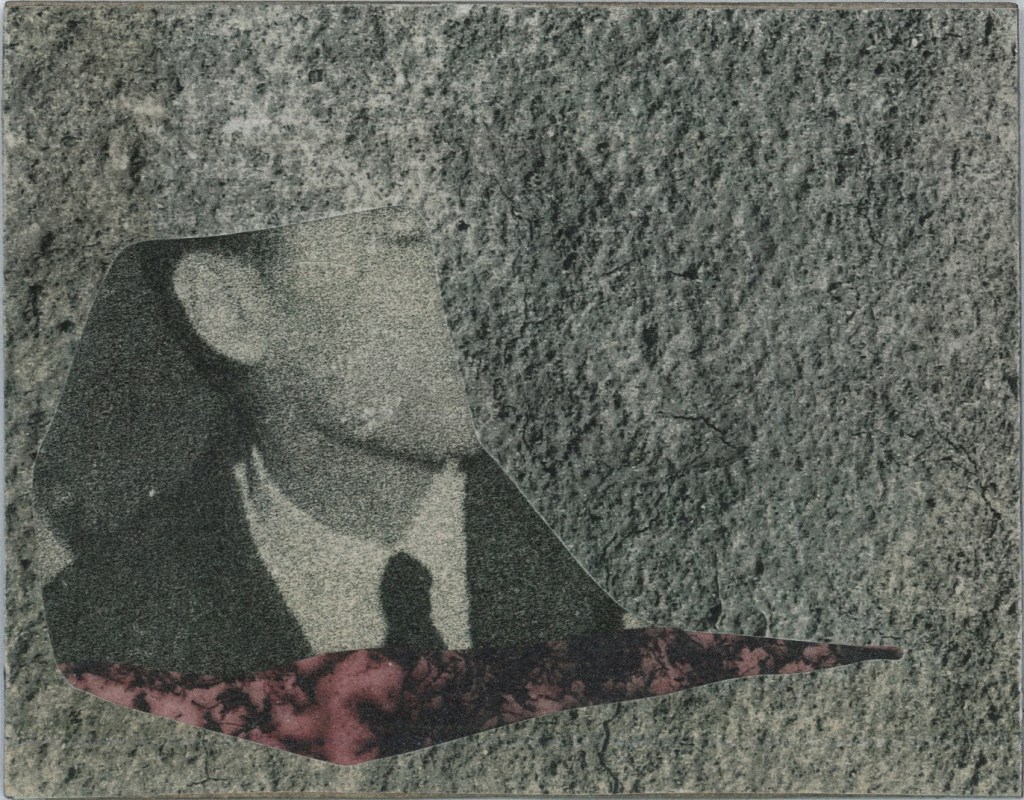
Furkan Öztekin’s collage series titled Tab solidifies an online search for AIDS visuals. He opens tabs with the sensational images of AIDS cases he found in the Turkish media archives, images from the KAOS GL Magazine (still publishing magazine by influential Ankara-based LGBTIQ organization with identitical name), some drawings, some photographs taken from inside and outside of the hospital where the exhibition also takes place. Copied, recorded, created images come together and contaminate each other; become as neutral as a virus, mixing positive and negative spaces of the conventional visual composition. Öztekin hides the faces and identities; accentuates the invisibleness. The archival images we can detect very partially from Öztekin’s collages appeared in an in-your-face manner on the shelves displaying Serdar Soydan’s study.
Written by Alper Turan, Positive Space : A Curatorial Project on HIV/AIDS, 2020
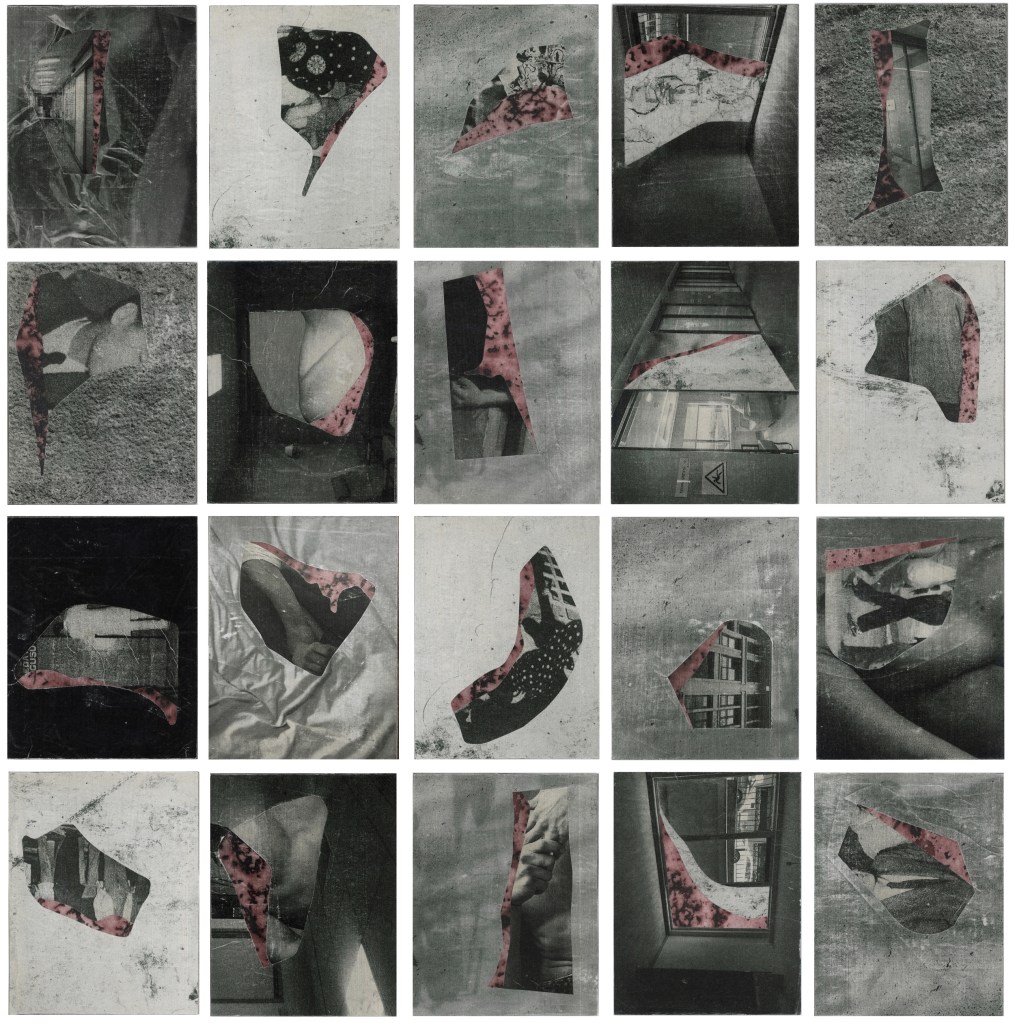
Tab, Paper Collage on Cardboard, 16 pieces, each 13×17 cm, 2018 (Courtesy of Ali Betil)
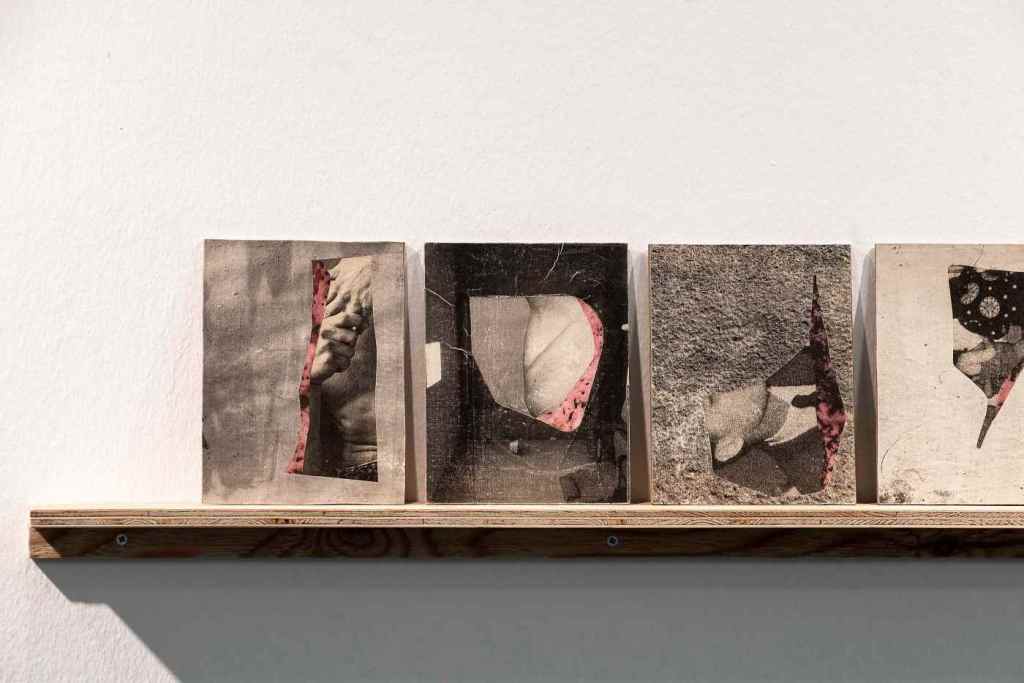
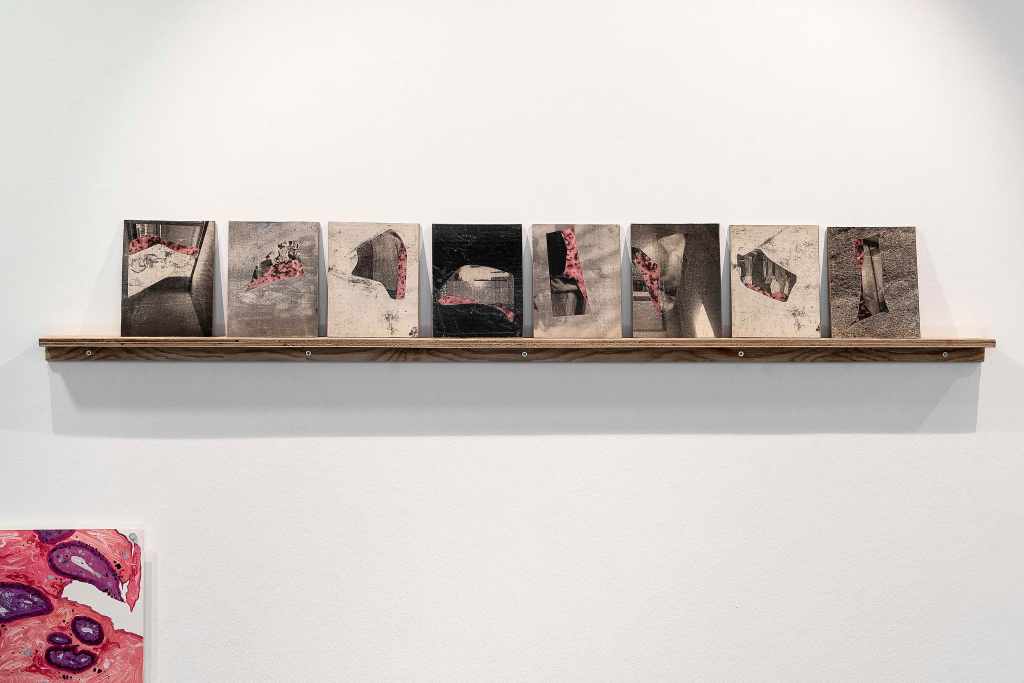
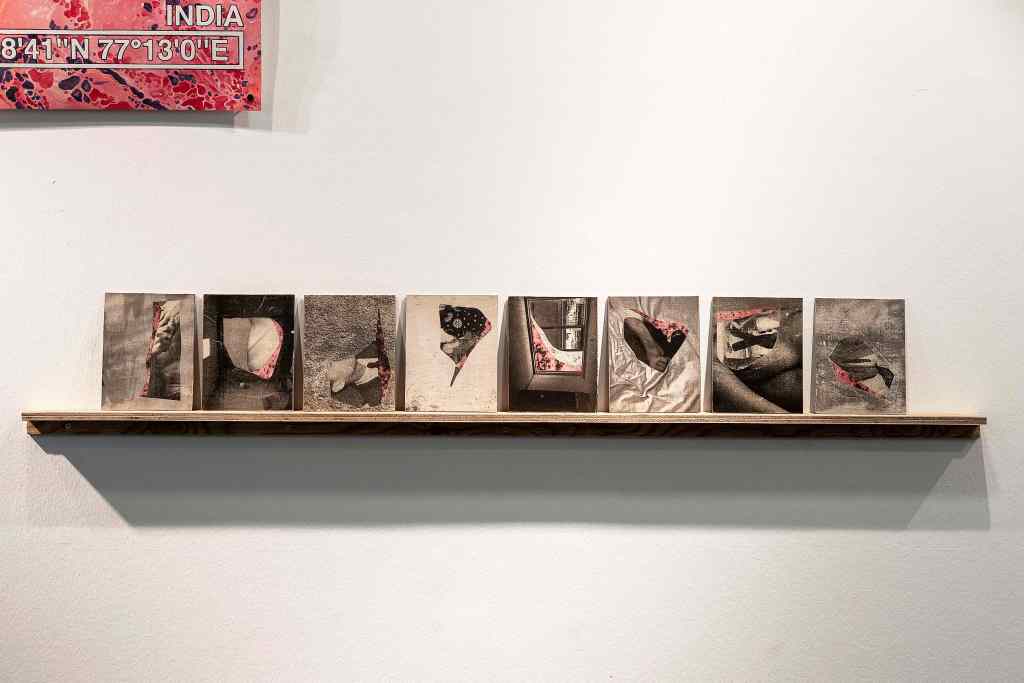

Exhibition Views from Positive Space, Operation Room, 2018 (Courtesy of Ali Betil )
On the bottom shelf of a wall, containing all manner of documents in Turkish about HIV (even a film poster) there appeared in near abeyance the delicate collages of Furkan Öztekin. I had seen them in the previous exhibition but I didn’t exactly register it at the time. In the “Tab series” (2018), Öztekin searched online for AIDS images in Turkish, yielding obviously sensationalist results, later recomposed by the artist.
Öztekin’s work seems to me a modification of the photological — a term I’m borrowing from archaeologist Dan Hicks referring to “any kind of knowledge made possible through the visualism co-produced by archaeology and photography.” That is, I am using archaeology here to mean any kind of ‘excavation’ (including the digital) that uses violence and tools of power articulated as neutral representations.
In his photological intervention, Öztekin makes the viewer aware, albeit discreetly, of the ‘state of being cast off’ in these images. Through recomposing them, and hiding the faces, he brings to light their invisibility.
Written by Arie Amaya-Akkermans – The Way We Live Now 1987-2020, Notes on Art and HIV from Turkey

In the same vein as my ambition to highlight the negative narratives surrounding, embodying, producing, and reproducing HIV/AIDS as an intergenerational trauma, Furkan Öztekin’s collage work in the exhibition Positive Space brings together images of AIDS in a series of poetic collages. Tab Series records online searches for AIDS visuals in Turkish-language websites. Furkan opens tabs on his computer with thesensational,informational,symbolic,indexical,oriconic images of AIDS he finds in Turkish popular printed press archives, in the KAOS GL online magazines, and on websites of local HIV/AIDS organizations. Then he merges found images with drawings and photographs he has taken from inside and outside of thehospital where the exhibition also takes place. Copied, recorded, and created images come together and contaminate each other; in losing their indexical or descriptive elements, they become as neutral as a virus. Furkan hides faces and identities in these images, accentuating invisibility. He mixes positive and negative spaces of the conventional visual composition by underlining the name of the exhibition. In this monochrome work, he uses the color grey, which both resists white’s associations as pure, clean, and safe, and black as impure, dirty, and dangerous; images are integrated in the form of collage.
As avant-gardist Group Mu’s manifesto from 1978 puts it:
“Each cited element breaks the continuity or the linearity of the discourse and leads necessarily to a double reading: that of the fragment perceived inrelation to its text of origin;that of the same fragment as in corporated into a new whole, a different totality. The trick of collage consists . . . of never entirely suppressing the alterity of these elements reunited in a temporary composition.” as cited in (Brockelman 2001)
Likewise,with his collages Furkan breaks the continuity of linear time by incorporating variously dated AIDS images, none of which are outdated and, on the contrary, still contribute to public perceptions of AIDS. As with double readings of fragments heuses,through the fragments of the historical media images and their incorporation into a whole new image, the series points out the origins of those fragmented images as well as their relevance to the contemporary era through the new collaged whole of fragments. However, unlike what Group Mu defines, Furkan’s collage series is not ephemeral or fragile as they could be; they are composed of two dimensional papers stiffened on cardboard. By emphasizing the subject-matter’s hereditary nature, its transmissibility across generations and nations,these solid collages are solidified and objectified as remnants of old times which are here and with us.
Written by Alper Turan, Positive Space : A Curatorial Project on HIV/AIDS, 2020
 Furkan Öztekin